The Benefits of Spirulina (And Why It’s Studied By NASA)
Written by Gordon Maudsley
Key takeaways:
- Spirulina is approximately 60–70% protein by dry weight — more than beef, chicken or eggs.
- The United Nations declared it “the best food for the future” and NASA has studied it as a food source for astronauts.
- Its active compound, phycocyanin, has well-documented antioxidant and anti-inflammatory properties backed by peer-reviewed research.
- Multiple meta-analyses of randomised controlled trials show spirulina may help reduce cholesterol and triglycerides.
- Spirulina is one of the ingredients in Total Wellness.
When I first came across spirulina during product development, I was pretty sceptical. Blue-green algae. Pond-coloured powder. Not exactly the most obvious thing to put in a supplement you want people to actually take.
But the more I researched it, the more I realised that spirulina has one of the most serious science bases of any ingredient I’ve worked with. This isn’t a trendy superfood. It’s been studied by NASA. Endorsed by the United Nations. Recognised by the World Health Organization. And the research on its nutritional profile and health benefits is genuinely impressive.
So I kept it in the blend. Once I understood what it was actually doing, there was no question.
What actually is spirulina?
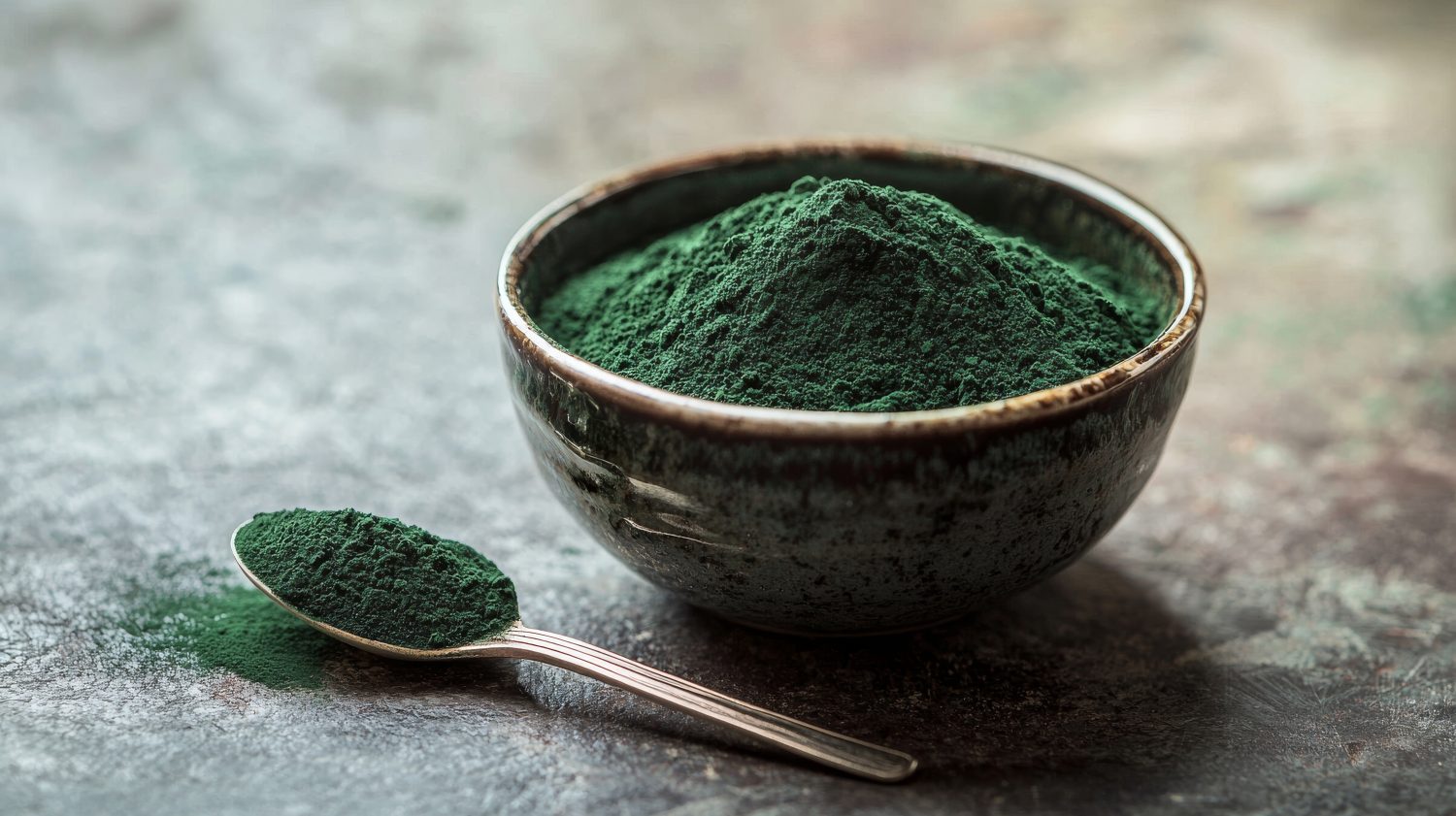
Spirulina is a microscopic, blue-green organism that grows in warm, alkaline freshwater lakes and ponds. Despite often being called an algae, it’s technically in its own category: a photosynthetic microorganism that’s been around on this planet for over three billion years.
Ancient civilisations clearly knew it’s value. The Aztecs harvested spirulina from Lake Texcoco. Communities around Lake Chad in Central Africa have incorporated it into their diet for centuries, pressing it into cakes and using it as a nutrient source during leaner times.
Modern science has confirmed what they understood intuitively: gram for gram, spirulina is extraordinary.
The numbers that stopped me in my tracks
Here’s the comparison that I keep coming back to.
Per 100g of dried weight:
| Food | Protein content |
|---|---|
| Spirulina | ~61% |
| Beef (lean) | ~26% |
| Chicken breast | ~27% |
| Eggs | ~13% |
| Soybeans | ~36% |
Source: USDA FoodData Central
To put that in context: Spirulina contains more than twice the protein by weight of beef. It’s a complete protein too, which means that it contains all nine essential amino acids your body can’t produce on its own — which is rare among plant-based sources.
NASA has researched spirulina as a compact, nutrient-rich food for astronauts because it’s high in protein, B vitamins and antioxidants. A peer-reviewed review published in PMC also noted that major space agencies study spirulina for its exceptional nutrition-to-weight ratio.
In 1974, the United Nations World Food Conference called spirulina “the best food for the future” because of its potential to fight global malnutrition. More recently, the US Food and Drug Administration gave spirulina “Generally Recognized as Safe” (GRAS) status.
What does spirulina do for your body?
It’s a serious source of antioxidants
Spirulina’s distinctive blue-green colour comes from a compound called phycocyanin, a pigment-protein that gives spirulina much of its biological punch.
Research has shown phycocyanin to have significant antioxidant properties, which helps decrease the unstable molecules that cause cellular damage and chronic inflammation.
A study published in PMC found that C-phycocyanin had substantial antioxidant potential and also showed immunomodulatory activity in animal models.
It may help reduce inflammation
Inflammation is one of those topics where I’m always careful with my language, because it’s easy to overclaim. But the evidence for spirulina here is reasonably robust.
A 2022 systematic review and meta-analysis published in a peer-reviewed journal covering 22 studies and over 5,000 participants found that spirulina supplementation significantly reduced inflammation. A separate systematic review of spirulina in exercise and sport (PMC) reviewed the antioxidant and anti-inflammatory effects on athletes. This includes a study that found spirulina supplementation helped prevent inflammation in elite rugby players.
I won’t pretend one supplement changes everything. But the anti-inflammatory research on spirulina is among the strongest I’ve seen for any single ingredient.
It may support healthy cholesterol and heart health
A meta-analysis published in Clinical Nutrition, which combined results from seven clinical trials, found that spirulina helped lower total cholesterol, LDL (“bad”) cholesterol and triglycerides, while increasing HDL (“good”) cholesterol. A more recent review of 20 studies involving more than 1,000 people, published on PubMed, confirmed these results.
The benefits were consistent across the studies and did not depend on the dose, suggesting that the effect is genuine rather than a result of any single study.
Is spirulina better than other protein sources?
That’s the wrong question, in my view. Spirulina isn’t a replacement for eating well. It’s not a meal.
Unlike most protein supplements, spirulina provides more than just protein. It also contains a wide range of vitamins, minerals, antioxidants and other beneficial compounds that work together. A PMC review on brain health noted that spirulina includes polysaccharides, healthy fats, B vitamins, carotenoids, iron, calcium, magnesium and zinc alongside its protein content.
That’s the point. It’s not protein powder with a blue tint. It’s a nutrient-dense whole food in concentrated form. Which is exactly what Total Wellness is designed to deliver.
Are there any side effects of spirulina?
For the vast majority of adults, spirulina is very well tolerated. Clinical trials using doses of up to 10g per day have not found serious adverse effects and the FDA’s GRAS status reflects that track record.
That said, a few groups should be cautious:
- People with autoimmune conditions: Spirulina may stimulate immune activity, which could be problematic for those with conditions like lupus, MS or rheumatoid arthritis. Speak to your GP first.
- People taking blood thinners: Spirulina contains vitamin K and compounds that can affect platelet aggregation, which could interact with anticoagulant medications like warfarin. Check with your doctor.
- People with PKU (phenylketonuria): Spirulina contains phenylalanine, which can’t be metabolised by those with this condition and should be avoided entirely.
- Pregnant or breastfeeding women: As with all supplements, it’s always worth checking with your GP before use.
Most contamination concerns about spirulina come from poorly sourced, unregulated products grown in open ponds. Choosing certified organic spirulina from a trusted, quality-assured source helps avoid this risk.
If you’re on any medication or managing a health condition, please check with your GP before adding any supplement to your routine.
Spirulina in Total Wellness
Spirulina is one of the ingredients in Total Wellness, alongside organic barley grass, wheatgrass, chlorella, kale, spinach, matcha, blueberry, acerola and a range of other whole-food ingredients.
The whole blend is 100% certified organic, made in the UK by a BRC/ISO accredited facility and contains no additives, fillers or artificial anything. Two teaspoons with 250ml of cold water, first thing in the morning. That’s it.
You can subscribe to save 10% and get free delivery every four weeks, which is how many customers choose to take it. It works best when used daily as part of your routine. Learn more here!
Written by Gordon Maudsley